
About Samale Institute
Samale Institute is a non-profit Somali based community organization dedicated to youth empowerment, education for sustainable development, applied learning and community-driven solutions. Through research, capacity building and partnerships, the Institute works to strengthen knowledge, practical skills and opportunities for sustainable change.
How Samale Institute’s women’s economic empowerment prototype is exploring community-led pathways to financial independence, confidence and sustainable livelihoods
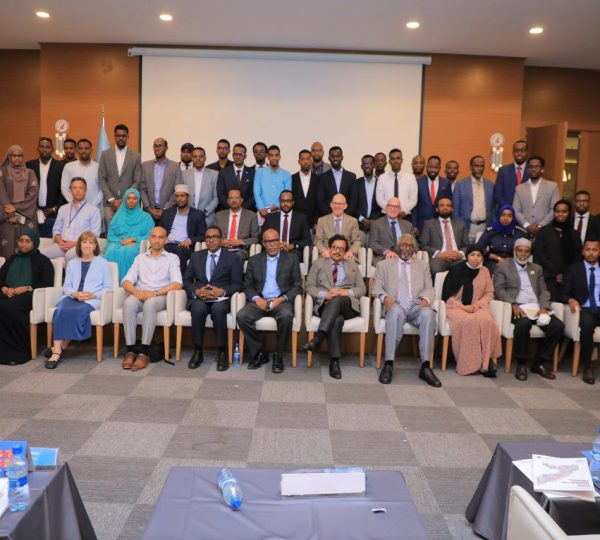 A multi-stakeholder institutional gathering. Photograph provided by Samale Institute; programme affiliation not verified.
Samale Institute | Programme Feature | 2025
Creating Opportunities for Young Somali Women
For many young women in Somalia, economic empowerment involves more than access to money. It requires practical knowledge, confidence, supportive relationships and opportunities to participate meaningfully in decisions affecting their lives.
Women seeking to establish businesses or improve their livelihoods may face interconnected challenges, including limited access to affordable finance, insufficient business development opportunities, restrictive social expectations and limited professional networks. These challenges can make it difficult to translate entrepreneurial ambition into sustainable economic activity.
Recognizing the importance of addressing these barriers together, Samale Institute developed Hiil-Gabar, a women’s economic empowerment prototype designed to explore an integrated approach to skills development, community savings, peer support and entrepreneurship.
Implemented in Mogadishu from January 2024 to February 2025, Hiil-Gabar brought together young women through a structured programme combining safe-space learning, life and business skills, peer mentoring and community-based savings arrangements known locally as Ayuuto.
Rather than treating financial inclusion as an isolated intervention, the prototype explored how economic opportunities could be strengthened alongside women’s confidence, agency and participation in household and community decision-making.
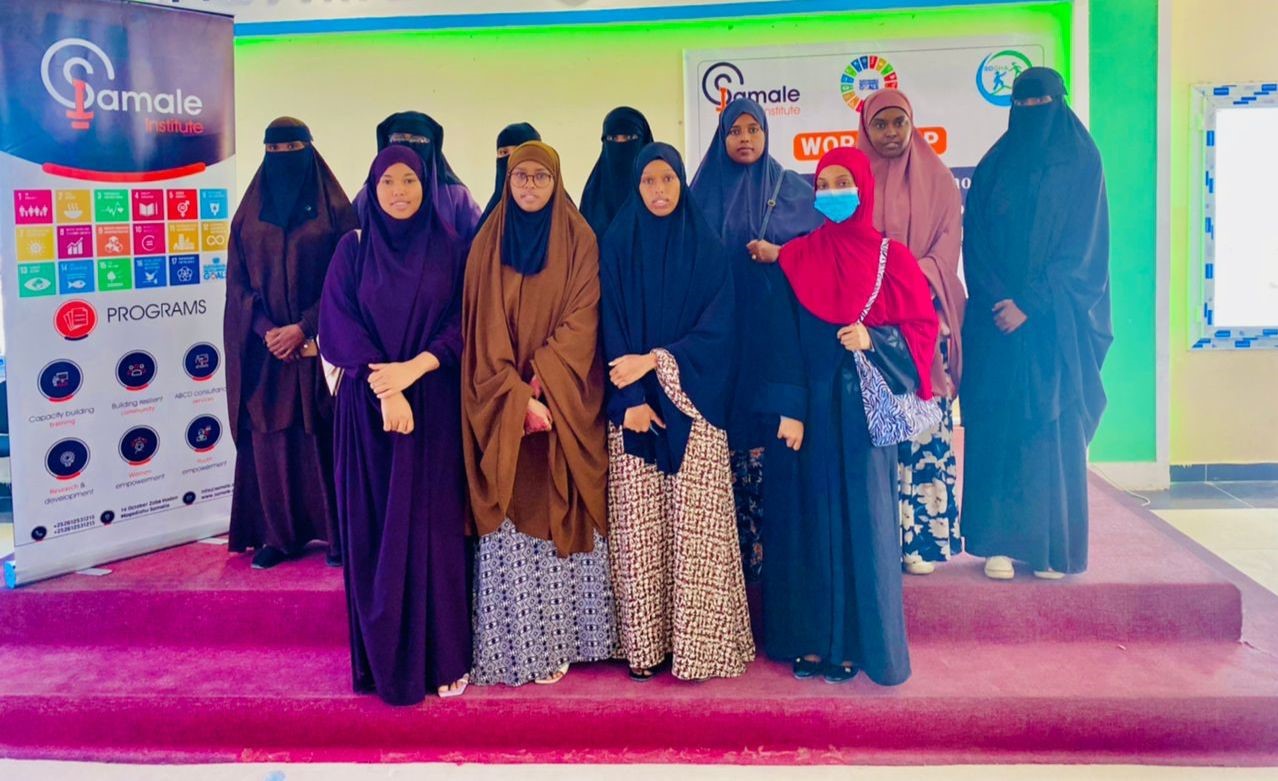
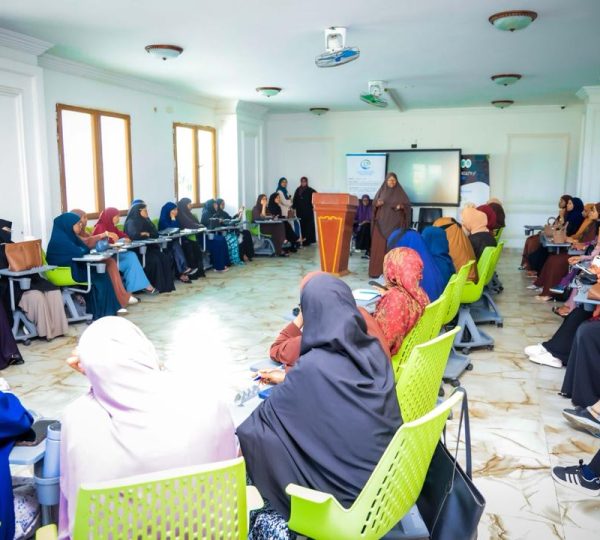 Source is Samale: A facilitated group learning session involving women participants.
Hiil-Gabar at a Glance
| Programme indicator | Reported result |
| Implementation period | January 2024–February 2025 |
| Location | Mogadishu, Somalia |
| Applications received | 340 |
| Women selected | 90 |
| Programme completion rate | 96% |
| Reported increase in self-perceived agency | 41% |
| Participants reporting greater respect | 89% |
| Reported enterprise-launch rate | 53%* |
The available programme summaries contain different enterprise-launch figures. This indicator requires verification against the original monitoring records before a definitive percentage can be published.
These early results provide useful insights into programme participation and participants’ reported experiences. They also offer an initial basis for considering how the approach might be strengthened and tested further.
Why Hiil-Gabar Matters
Women’s economic participation is essential to inclusive and sustainable development. When women have opportunities to develop skills, access financial resources and engage in productive economic activities, they are better positioned to contribute to household livelihoods and local economies.
However, economic empowerment cannot be measured solely by the number of women who attend training or establish businesses. It also concerns whether women can make informed choices, exercise greater control over resources, participate in financial decisions and pursue opportunities in environments that recognize their contributions.
Hiil-Gabar was designed around this broader understanding of empowerment.
The prototype brought together three closely connected dimensions: economic capability, personal agency and community support.
Economic capability refers to the knowledge and practical skills needed to manage money, plan business activities and pursue income-generating opportunities. Personal agency concerns women’s confidence and ability to make choices affecting their lives. Community support recognizes that individual progress is influenced by household relationships, social norms and access to trusted networks.
By integrating these dimensions, Hiil-Gabar sought to develop a model that would be locally relevant, participatory and potentially sustainable beyond a conventional training programme.
An Integrated Approach to Women’s Empowerment
- Safe Spaces for Learning and Personal Development
A central component of Hiil-Gabar was the use of structured safe-space sessions where participants could learn, exchange experiences and strengthen their confidence.
These sessions created opportunities for young women to engage in practical discussions about personal development, economic participation and the challenges associated with pursuing livelihood opportunities.
The learning approach emphasized participation and peer interaction rather than relying exclusively on formal instruction.
For women who may have limited access to professional networks or structured development opportunities, such spaces can provide an important foundation for learning and mutual encouragement.
The prototype therefore treated the learning environment itself as an important part of the empowerment process.
- Financial Literacy and Business Skills
Financial literacy and entrepreneurship formed another important part of the Hiil-Gabar approach.
The programme aimed to strengthen participants’ understanding of financial management and the practical considerations involved in developing income-generating activities.
Business skills development was intended to help participants move beyond general interest in entrepreneurship toward more informed planning and decision-making.
This combination is particularly relevant for women entering small-scale business activities, where effective budgeting, resource management and an understanding of business risks can influence financial stability.
Hiil-Gabar’s approach recognized that access to savings or business capital is more useful when accompanied by the knowledge and confidence to manage financial resources responsibly.
- Ayuuto: Building on Community-Based Savings Practices
One of the prototype’s distinguishing features was its integration of Ayuuto, a familiar Somali community-based rotating savings practice. Ayuuto arrangements generally involve members contributing agreed amounts to a collective savings mechanism, with funds distributed according to group arrangements. Within Hiil-Gabar, the savings-led approach was intended to connect financial participation with peer accountability, mutual support and opportunities for enterprise development.
The use of a locally familiar savings mechanism is significant because it builds on an existing community practice rather than requiring participants to adopt an entirely unfamiliar financial model. It also offers an opportunity to explore how informal savings arrangements can complement financial literacy, entrepreneurship support and potentially more formal financial services.
Nevertheless, the sustainability of such arrangements depends on clear group rules, transparent record-keeping, affordability of contributions and effective mechanisms for resolving disagreements. These considerations remain important areas for further assessment as the Hiil-Gabar model develops.
- Peer Mentoring and Collective Learning
Hiil-Gabar also incorporated peer mentoring as a mechanism for supporting participants throughout their learning and enterprise development journeys.
Peer-based approaches can help participants exchange practical experiences, discuss challenges and encourage one another to apply newly acquired skills. This dimension is particularly important because entrepreneurship and financial decision-making frequently involve uncertainty.
A supportive peer network can provide opportunities for problem-solving, accountability and shared learning. The prototype therefore explored empowerment not only as an individual achievement but also as a process strengthened through relationships and collective participation.
From Applications to Programme Completion
The response to the Hiil-Gabar prototype demonstrated substantial interest in the programme. A total of 340 applications were received, from which 90 young women were selected to participate. This represents a selection rate of approximately 26.5%, illustrating that demand exceeded the available places in the initial prototype.
The programme subsequently reported a 96% completion rate, equivalent to approximately 86 participants if calculated against the 90 women selected. High programme completion is an encouraging implementation indicator. It suggests that the majority of selected participants remained engaged through the programme.
However, completion alone does not establish economic impact. A fuller assessment would consider how participants applied their learning, whether businesses remained operational and whether reported changes in confidence and decision-making were sustained over time. The prototype provides an important starting point for this longer-term assessment.
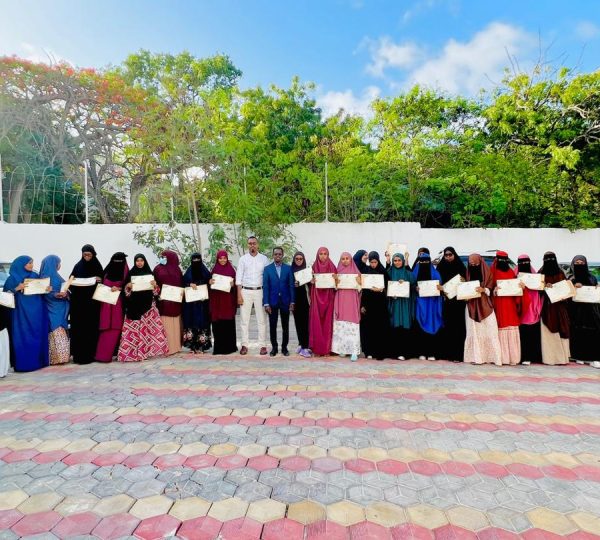 Source is Samale: Women displaying certificates at a group event.
Early Findings: Economic Participation, Agency and Social Recognition
Supporting Women’s Enterprise Development
Enterprise development was a central ambition of Hiil-Gabar. The available programme reporting indicates that a proportion of participants launched income-generating enterprises during or following their involvement in the prototype.
A figure in the programme material: 53% in a visual summary suggest that enterprise creation was a meaningful component of participants’ reported experience.
Future assessment should move beyond enterprise launch to examine business continuity, profitability, income generation, access to markets and the ability of participants to reinvest earnings. These measures would provide a stronger understanding of whether early business activity translates into sustainable livelihood improvements.
Strengthening Personal Agency
The programme reported a 41% increase in participants’ self-perceived agency. Agency is a particularly important dimension of women’s empowerment because it concerns the ability to identify goals, make choices and act on decisions.
For young women pursuing economic opportunities, confidence and decision-making capacity may influence whether they feel able to manage financial resources, engage in business activities or participate in household discussions.
The reported findings are encouraging, although the available summary does not specify the measurement scale or assessment methodology. It should therefore be understood as a preliminary self-reported outcome rather than a verified causal effect of the programme.
Greater Respect and Recognition
Another notable finding was that 89% of participants reported experiencing greater respect. This result is relevant to Hiil-Gabar’s wider understanding of empowerment. Economic participation does not take place independently of social relationships. Women’s opportunities can be influenced by the extent to which their knowledge, contributions and decisions are recognized within households and communities.
The reported change suggests that participants perceived positive developments in how they were regarded. Further qualitative research could help clarify the nature of these changes, including whether greater respect was associated with income generation, improved communication, increased confidence or other aspects of programme participation.
What the Prototype Has Taught Us
The Hiil-Gabar experience offers several important lessons for designing women’s economic empowerment initiatives in Somalia.
First, locally grounded approaches deserve greater attention. Integrating Ayuuto into a structured development programme illustrates how familiar community practices can provide a foundation for exploring inclusive financial participation.
Second, financial literacy and entrepreneurship should be considered alongside personal development. Business knowledge is valuable, but women’s ability to use that knowledge may also depend on confidence, decision-making opportunities and supportive relationships.
Third, peer networks can be important programme resources. The combination of safe-space sessions and mentoring created opportunities for collective learning and ongoing encouragement.
Fourth, demand for women’s economic empowerment opportunities is evident. Receiving 340 applications for 90 places indicates substantial interest in the initial programme, although it does not by itself establish demand across the wider population.
Finally, strong monitoring is essential for demonstrating sustainable results. The prototype’s preliminary findings provide a useful basis for learning, but longer-term evidence is needed to understand enterprise survival, financial resilience and changes in household decision-making. Together, these lessons offer a foundation for refining the model before wider implementation.
Looking Ahead: From Prototype to a Scalable Model
The completion of the Hiil-Gabar prototype creates an opportunity for Samale Institute to assess the model’s strengths, address implementation gaps and consider the conditions required for expansion. A future phase could place greater emphasis on structured follow-up support for participants who establish enterprises, including mentoring on business planning, financial management, market access and enterprise sustainability. It could also strengthen the monitoring of savings group performance, including contribution regularity, financial transparency, participant retention and the affordability of savings commitments. Equally important would be a stronger measurement framework covering economic and non-economic outcomes.
Potential indicators include business survival after six and twelve months, changes in personal income, savings accumulation, women’s participation in household financial decisions and the continuation of peer-support networks. Engagement with financial institutions, community stakeholders and development partners could also help identify opportunities to strengthen the model while maintaining its local relevance. Any future expansion should be guided by evidence from the prototype, participant feedback, implementation costs and an assessment of the resources needed to maintain programme quality.
Contributing to the Sustainable Development Goals
Hiil-Gabar is closely aligned with several internationally recognized development priorities.
Its emphasis on women’s economic opportunities and decision-making relates to SDG 5: Gender Equality. Its financial literacy and livelihood development components support the objectives of SDG 8: Decent Work and Economic Growth. By exploring accessible pathways to economic participation, the initiative also relates to SDG 1: No Poverty and SDG 10: Reduced Inequalities.
These connections reflect the programme’s intended contribution to sustainable development. Demonstrating measurable progress against specific SDG targets would require additional outcome and impact evidence.
Building a Future of Opportunity and Economic Independence
Hiil-Gabar represents Samale Institute’s effort to explore a practical, community-informed approach to women’s economic empowerment. Through its combination of financial literacy, entrepreneurship support, peer mentoring, safe-space learning and Ayuuto savings practices, the prototype has sought to address several of the interconnected factors influencing women’s economic participation.
The initial programme engaged 90 selected young women and reported high completion, enterprise development activity and encouraging changes in perceived agency and social recognition.
These results are promising, while remaining preliminary.
The next challenge is to understand which elements of the model are most effective, how benefits can be sustained and what adaptations would be necessary to reach more women without compromising programme quality. For Samale Institute, Hiil-Gabar is more than a completed prototype. It is an opportunity to generate practical evidence about how locally grounded approaches can strengthen women’s capabilities, economic opportunities and participation in sustainable development.
By investing in women’s skills, confidence and collective capacity, Hiil-Gabar seeks to contribute to a future in which more young Somali women can shape their own economic pathways and participate fully in the development of their communities.
Website: www.samale.so
Email: info@samale.so
Location: Mogadishu, Somalia